The language from its first letter
The course starts at the alphabet and carries you to the point where you speak rather than hunt for words. Short lessons, theory without jargon, exercises after every topic.
Imagine having a local friend with you all the time. One who knows the language, knows how everything here works, and has infinite patience. Who explains why this ending and not that one, reads the contract that just arrived, writes your application for you and rehearses the conversation until you stop stumbling.
Kartuli is that friend. The course takes you from the first letter of Mkhedruli to real conversation, the guide explains the country — documents, money, housing, healthcare — and the AI assistant covers everything in between: it translates, takes your mistakes apart and plays the person on the other side of the counter.
A few months in you catch yourself reading a sign without thinking about it, and answering in a queue before you have translated anything in your head. That is the moment you stop being a newcomer here.
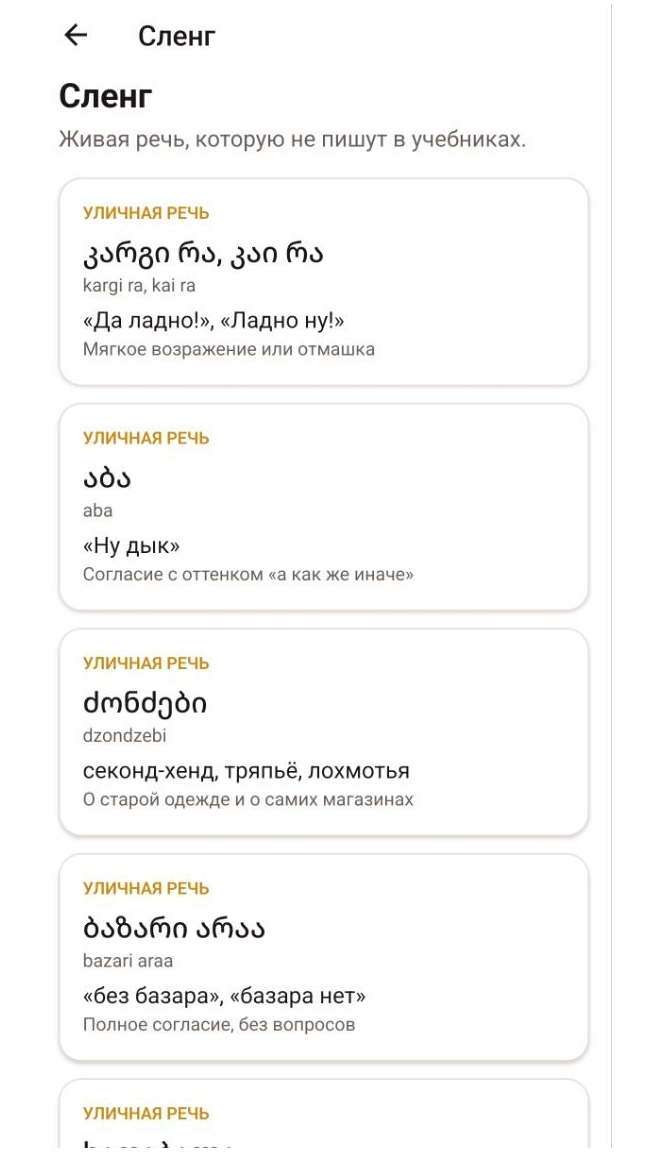
Language apps teach the language in general. They do not know that in a week you are due at the House of Justice, that your tenancy agreement has a clause about utilities you will not be able to read, and that at the market someone will talk to you faster than any textbook dialogue.
Kartuli works the other way round: from the life to the language. First the situation you will be in, then the words it needs. That is why the guide and the phrasebook are stitched together — the article about the Revenue Service carries exactly the five words you will hear there.
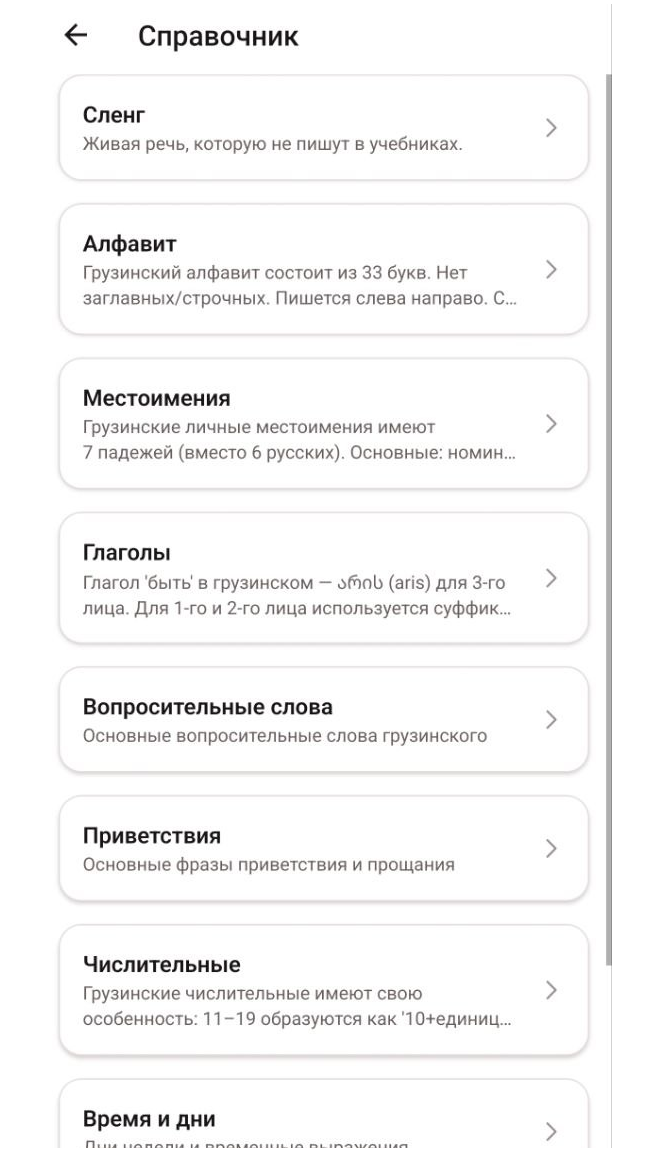
Mkhedruli has thirty-three letters, no capitals and none of the usual handholds. The course starts there and gets you reading signs within weeks: short lessons, the pairs of sounds Russian does not have, exercises straight after the theory.
Then grammar without the fog of terminology, tenses, cases and a word order that is not arranged the way you are used to. By B2 you are speaking rather than hunting for words.
You cannot learn a language from invented words, and an app cannot easily say "I am not sure" — usually it just says nothing. We did it differently: every unit of material has a source and a verification status, and both are visible.
What a native speaker has checked is marked one way, what is still waiting another. The same goes for the guide: figures and rules are dated, and anything that can change comes with a list of what to confirm locally — because in Georgia a great deal changes.
A contract arrives in Georgian. The agent sends a message. You need to write an application and you know three words. The assistant translates the document and explains it in plain language, and in a contract it points separately at the places worth a closer look.
It also takes apart your own sentence: where the mistake is and why. And it plays the shopkeeper, the doctor or the official while you practise — getting it wrong costs nothing and the other side never tires.
The whole course, the whole guide and the whole phrasebook live inside the app. In a minibus, in the mountains, in a basement office and on roaming it behaves exactly as it does at home — which is precisely where it is needed.
Six interface languages: Russian, Ukrainian, Armenian, Kazakh, Turkish, English. Not only the interface is translated, but the course material too.
The course starts at the alphabet and carries you to the point where you speak rather than hunt for words. Short lessons, theory without jargon, exercises after every topic.
Every word has a source and the app shows which. What a native speaker has checked and what is still waiting are marked differently, so you always know what you are leaning on.
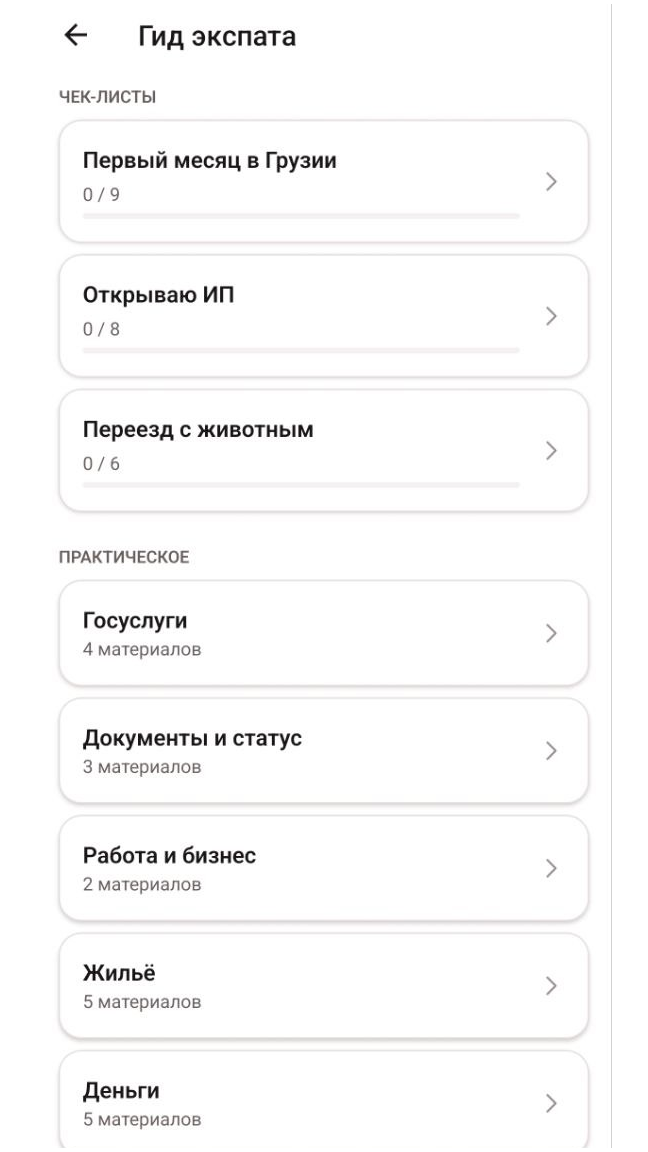
Documents and residence permits, a bank account, registering as a sole trader, insurance, renting and tenants’ rights, schools, transport, connectivity — and where to go when something has gone wrong. Alongside it: cities, mountains, food and weekend routes.
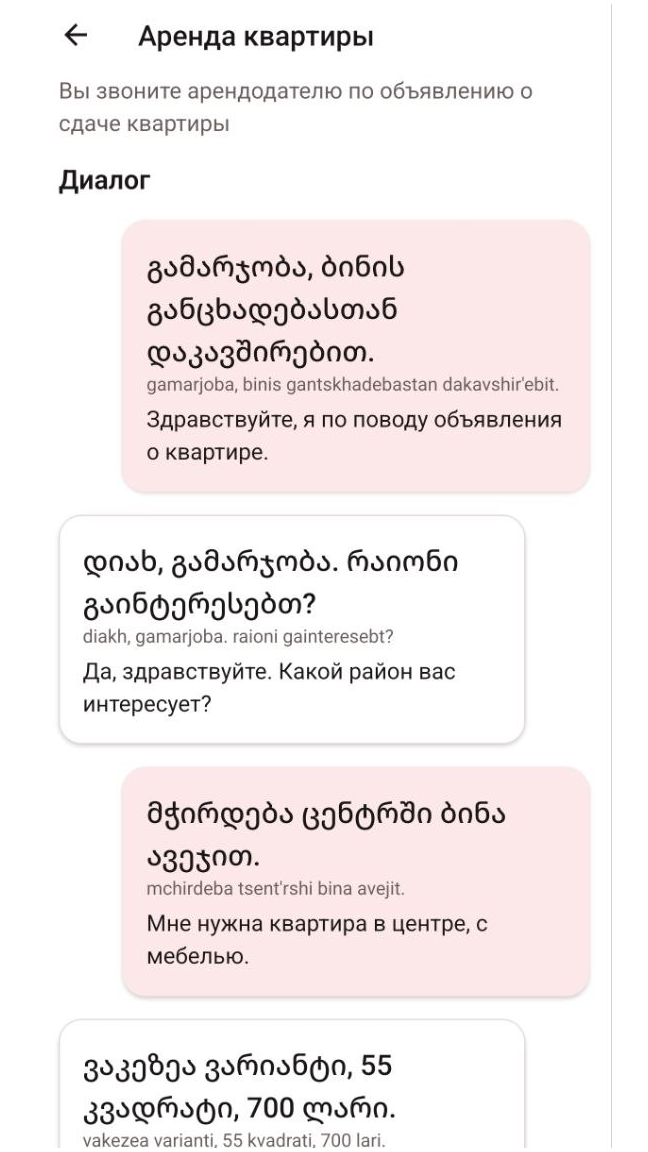
A phrasebook by situation: pharmacy, market, bank, minibus, doctor, government office. Whole dialogues as they actually run. Every practical guide article carries a "how to say it" block.
"First month in Georgia", "Registering a business", "Moving with a pet". Tick a step and the app keeps it.
"Mama" in Georgian means father. Separate lessons for words that sound familiar and mean something else entirely.
Russian, Ukrainian, Armenian, Kazakh, Turkish, English. Not just the interface — the whole course is translated.
Everything lives inside the app. In a minibus, in the mountains and in a queue it works the way it does at home.
Lessons, the guide and the phrasebook are open from the start and in full: no lesson is locked behind a payment. The app shows ads; premium removes them.